


Comprehensive Exosome Research Services
Service Features
Exosome isolation and identification technologies are widely used in biomedical research, including understanding intercellular communication mechanisms, studying disease pathogenesis, discovering biomarkers, and developing novel drug delivery systems. GeneCreate provides one-stop services from exosome extraction and identification to functional validation, with extensive experience in exosome extraction, particularly plant exosome extraction.
Service Introduction
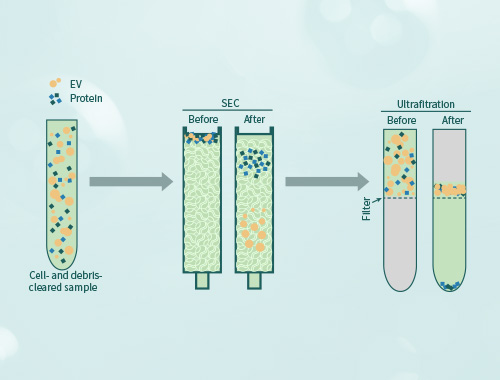
Exosome isolation and identification is an experimental technique used to separate and analyze exosomes from biological samples. Exosomes are small vesicles released by cells that carry biological molecules such as lipids, proteins, and nucleic acids. The extraction process purifies exosomes from samples through specific processing steps, while the identification process utilizes various methods to analyze exosomes, including morphological observation and molecular analysis.
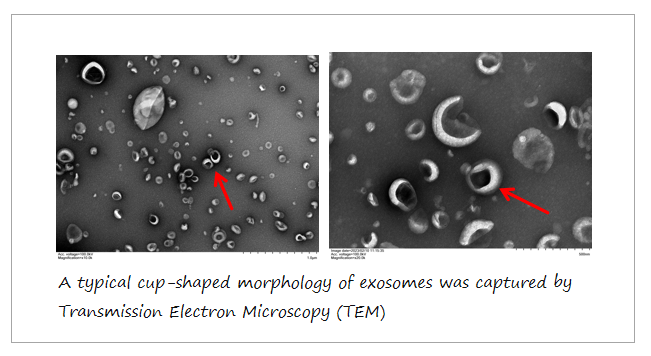
Exosomes (exosome), specifically refer to disc-shaped vesicles with a diameter of 40-100nm. They mainly originate from multivesicular bodies formed by the invagination of intracellular endolysosomal particles, which are released into the extracellular matrix after the fusion of the multivesicular body outer membrane with the cell membrane. It has been confirmed that cells that can secrete exosomes include: mast cells, lymphocytes, dendritic cells, tumor cells, mesenchymal stem cells, etc.
Exosomes play important roles in physiological and pathological processes such as antigen presentation in immunity, tumor growth and migration, and tissue damage repair. Meanwhile, exosomes secreted by different cells have different components and functions, and can serve as biomarkers for disease diagnosis.
Service Advantages
- Advanced Technology: Apply advanced extraction and identification technologies to ensure efficient and reliable services.
- High-Quality Data: Professional team performs accurate analysis and interpretation, providing reliable results and reports.
- Personalized Solutions: Provide customized solutions according to customer needs, closely cooperating with research projects.
- Confidentiality and Reliability: Strictly protect customer sample and data information, providing secure and reliable services.
- Fast Delivery: Efficient experimental processes and operational experience ensure timely delivery of results to meet time requirements.
Service Process
Customer Requirements
Serum, plasma, saliva, urine and other body fluids, cell supernatant, plant samples and other special samples
Sample submission requirements:
1. Serum: Collect blood using additive-free blood collection tubes; use RNase-free centrifuge tubes; sample volume >4ml
2. Plasma: Heparin anticoagulant cannot be used; hemolyzed samples are not recommended; process promptly and avoid vigorous shaking; sample volume >4ml
3. Cell supernatant: Culture with exosome-free serum; centrifuge to remove cell debris; prevent mycoplasma and other microbial contamination; sample volume >20ml
4. Plant samples: Plant tissue
Service Description
| Service Name | Service Content | Cycle (Working Days) |
| Exosome Extraction | Serum/Plasma | 15-20 working days (including particle size and EM time) |
| Cell Culture Supernatant | ||
| Plant Exosomes (Previously successful extraction) | ||
| Plant Exosomes (First-time extraction) - No charge if extraction fails | ||
| Nanosight Particle Size Detection | 15-20 working days (including particle size and EM time) | |
| Transmission Electron Microscopy Detection (3 images) | 15-20 working days (including particle size and EM time) | |
| Exosome Flow Cytometry | 15-20 working days (including particle size and EM time) | |
| Exosome WB (CD9, CD63, CD81, TSG101 markers) | 15-20 working days (including particle size and EM time) | |
| PKH26 Exosome Staining | 10 working days | |
| Exosome miRNA Sequencing | 25 working days | |
| 3D In Vivo Imaging of Exosomes in Mice | Negotiable | |
| Exosome Engineering Modification | Negotiable |
Case Studies
Ready to Start Your Exosome Research Project?
Our expert team is ready to support your research with comprehensive exosome services, from isolation and characterization to cargo analysis and functional studies. Get in touch with us for a consultation or request a quote today.
Contact Our ExpertsQ&A
Which marker is best for WB identification of exosomes?
Why are CD63, CD9, CD81, as well as TSG101, HSP70, ALIX, etc., chosen as markers for exosomes or extracellular vesicles? Are these marker proteins unique to exosomes?
Must exosomes observed by electron microscopy have a membrane structure? Are spherical structures without a membrane correct?
Can NTA be used for exosome quantification?
Customer reviews
"Your all-round exosome research services are top-tier. Stable experimental results, strict quality control and reasonable service cycle save us much time and cost. The staff are patient and proficient in technology. We hold full trust and will keep stable cooperation all the time."

Olivia White
Clinical Research Specialist
"Wonderful experience of exosome research full-set services. Complete technical solutions, standardized operation and detailed research reports fully meet our project requirements. Fast response and considerate after-service are impressive. We sincerely recommend your professional research services to industry partners."
Eric Clark
Biological Project Director
"We are extremely satisfied with your comprehensive exosome research services. The team is highly professional with rigorous experimental procedures and accurate test data. Timely communication and efficient progress greatly boost our research progress. Reliable quality and thoughtful support, we firmly choose long-term cooperation."
Sophia Lee
Pharmaceutical Research Supervisor