

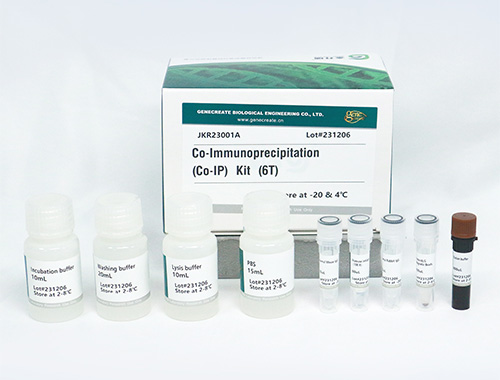
Plant Co-Immunoprecipitation (Co-IP) Kit
| Product Code | Specification |
|---|---|
| JKR23001P |
Experimental Principle
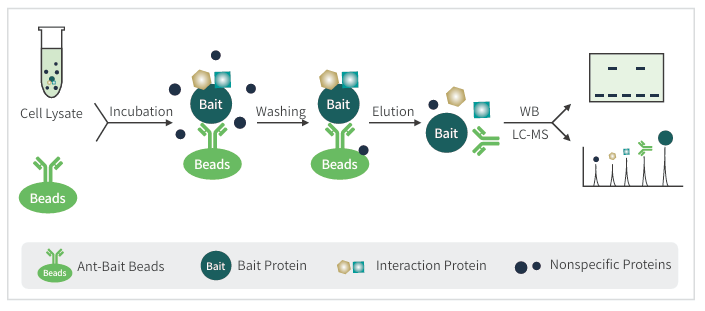
Co-Immunoprecipitation (Co-IP) is a method based on the specific interaction between antigens and antibodies, used to study protein-protein interactions. After antibodies bind to corresponding proteins in the lysate, they are incubated with Protein A/G-coupled Sepharose or Magnetic Beads. The Protein A/G bead-antibody-target protein complex is obtained through centrifugation or magnetic separation. Under high temperature and reducing agents, the antigen and antibody dissociate, and the supernatant is collected, containing antibodies, target proteins, and a small amount of impurity proteins. Proteins are then identified through Western Blot or mass spectrometry (MS). The principle is illustrated below:
Product Advantages
- Precise Capture: Optimized beads and buffers ensure efficient enrichment of target proteins and their interaction partners, reducing non-specific binding.
- Low Background Design: Optimized elution and washing solutions minimize interference signals, improving detection of weak interactions, suitable for low-abundance protein research.
- Standardized Protocol: Detailed step-by-step instructions (with video link) enable quick mastery, reducing optimization time.
- Easy Operation: Saves time with objective and accurate results.
Scope of Application
- Protein-protein interaction validation
- Identification of multiprotein complex components (e.g., transcriptional regulatory complexes, enzyme complexes, or virus-host protein complexes)
- Post-translational modification studies: Analysis of how modifications such as phosphorylation and ubiquitination affect protein interactions, often combined with mass spectrometry or specific antibodies
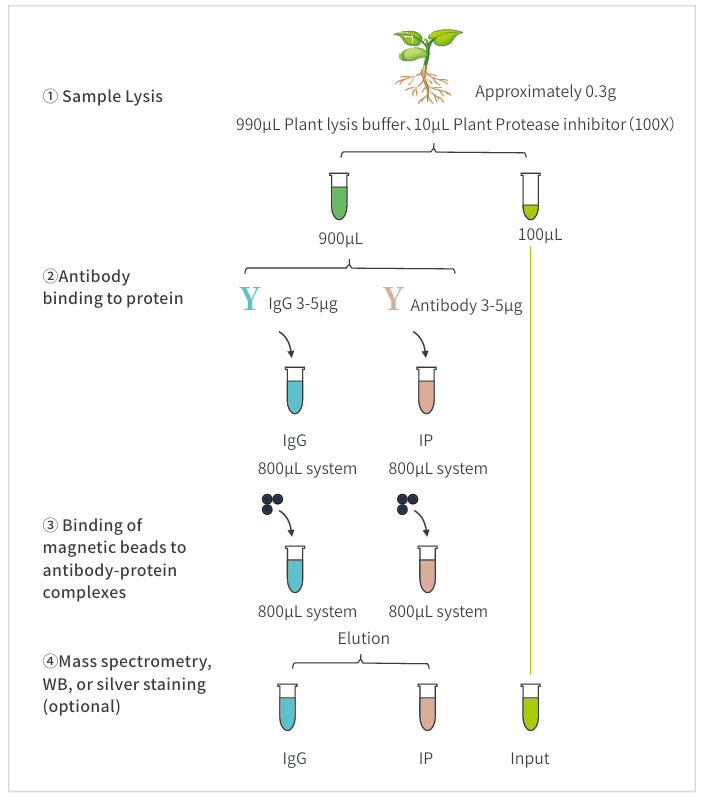
Experimental Procedure
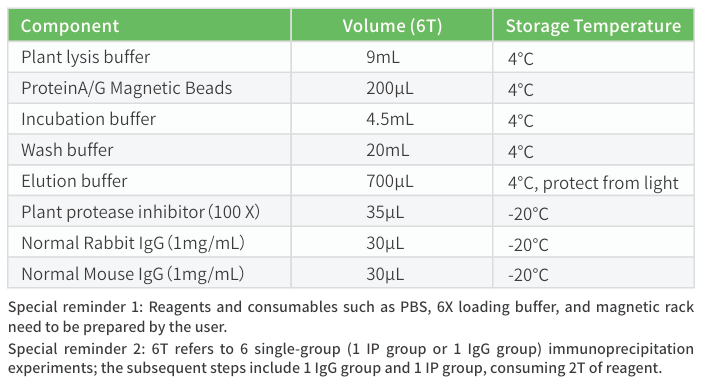
Reagent Kit Components