


Subcloning/Vector Construction
Service Features
GeneCreate possesses various high-throughput, low-cost cloning technologies that can directionally and seamlessly clone your target gene into the specified position of the vector without restrictions from sequence and enzyme cutting sites. We can provide construction of full-length protein-coding ORFs with different tag proteins and protein functional fragments as required.
Service Introduction
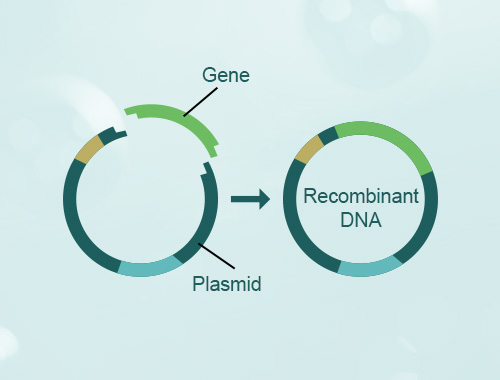
Subcloning and vector construction are commonly used techniques in genetic engineering, primarily used to insert target genes into vector DNA molecules to construct recombinant DNA molecules. Subcloning is the process of transferring a DNA molecule from one vector to another, typically using restriction enzymes to cut the DNA molecule and insert the target DNA fragment into another vector. Vector construction involves inserting the target gene into an existing vector molecule, usually achieved through techniques such as PCR amplification and restriction enzyme digestion. These technologies have wide applications in genetic engineering, biopharmaceuticals, agricultural production, and other fields, providing researchers with an effective and reliable method for constructing recombinant DNA molecules.
Service Advantages
- GeneCreate has independently developed high-throughput, low-cost vector construction technologies that can quickly and efficiently help you construct various vectors of interest, greatly saving your time costs and allowing your valuable time to be spent on the "cutting edge".
Service Process
Our subcloning/vector construction service follows a rigorous 6-step process to ensure accurate and reliable results. Each step is carefully monitored and quality-controlled to maintain the highest standards in genetic engineering research.
Customer Requirements
1. Customer provides target sequence information;
2. Information about the vector into which the target sequence needs to be inserted, including sequence, resistance, sequencing primers, and cloning sites;
3. Samples:
▶ Template plasmid containing the target sequence, resistance of the template plasmid;
▶ Target vector (if GeneCreate cannot provide the vector);
4. Chromatogram format sequencing report of the target gene sequence segment in the template plasmid (not the entire template plasmid sequencing report).
Service Description
|
Service Type |
Gene Length | Service Cycle (Working Days) |
| Subcloning |
0~1.5kb |
5-8 |
|
1.5kb~3kb |
7-10 | |
|
3kb~4kb |
8-13 | |
|
4kb~5kb |
10-15 | |
|
5kb~10kb |
Consultation | |
| Vector Construction |
0-70bp |
7-10 |
Ready to Start Your Genetic Project?
Our expert team is ready to support your research with custom gene synthesis services, from codon optimization to complex gene construction. Get in touch with us for a consultation or request a quote today.
Contact Our ExpertsQ&A
How to purify PCR products?
When providing bacterial cells for sequencing, what is the best form to provide?
Customer reviews
"Great service for subcloning and vector construction. Strict experimental standards ensure stable and reliable finished vectors. The team is efficient and responsive to all demands. It greatly accelerates our project progress with satisfying outcomes. We sincerely recommend this professional service."

Julia Foster
Molecular Experiment Supervisor
"Satisfied with professional subcloning service. Constructed vectors are stable and reliable with low error rate. Fast delivery and considerate service fully meet our various molecular experiment demands."
Carl Benson
Molecular Experiment Researcher
"Your vector construction service is precise and efficient. High cloning success rate and accurate sequence verification. Standard operation and detailed data reports greatly advance our gene expression related research work."
Doris Miller
Genetic Vector Researcher