


In recent years, the review criteria for submissions in the fields of biochemistry, traditional Chinese medicine pharmacology, chemical biology, and autoimmune diseases have been continuously tightened. Manuscripts that only conduct single wet experiments on cells or animals, or only perform pure computational simulations such as molecular docking and molecular dynamics, are increasingly difficult to impact the first district of the Chinese Academy of Sciences or top journals. Pure wet experiments can only observe cell and animal phenotypes, and it is difficult to explain the underlying mechanism of target interaction at the molecular conformation level; while isolated computational simulations only stay at theoretical predictions and lack multi-layer real data support such as in vitro protein binding, cell function, and in vivo efficacy, and are extremely likely to be judged by reviewers as "empty and lacking experimental evidence".
The research paradigm of combining wet and dry experiments perfectly solves two major pain points:
Dry experiments (molecular modeling, virtual screening, molecular dynamics, bioinformatics database analysis) are used to propose scientific hypotheses, narrow the screening scope, and predict molecular interaction patterns; then relying on multi-layer wet experiments (SPR/MST biophysical binding verification, proteomics/metabolomics, cell function, gene editing, animal models) to complete the full-chain verification, forming a complete closed-loop evidence chain of "computational prediction - in vitro confirmation - cell mechanism - in vivo efficacy", which is also the most favored writing framework by current high-scoring journals. This article selects five recently published high-scoring literatures in 2026, covering five popular directions: natural product molecular glue, tumor metabolic targets, RNA covalent small molecules, traditional Chinese medicine anti-metastasis monomers, and new autoimmune kinase drugs, and disassembles the complete research idea of combining wet and dry experiments for scientific researchers to refer to experimental design and build the research route of the project.
The First One | SPR Linking Degradomics and Interactomics: Standardized Screening System for Natural Molecular Glue

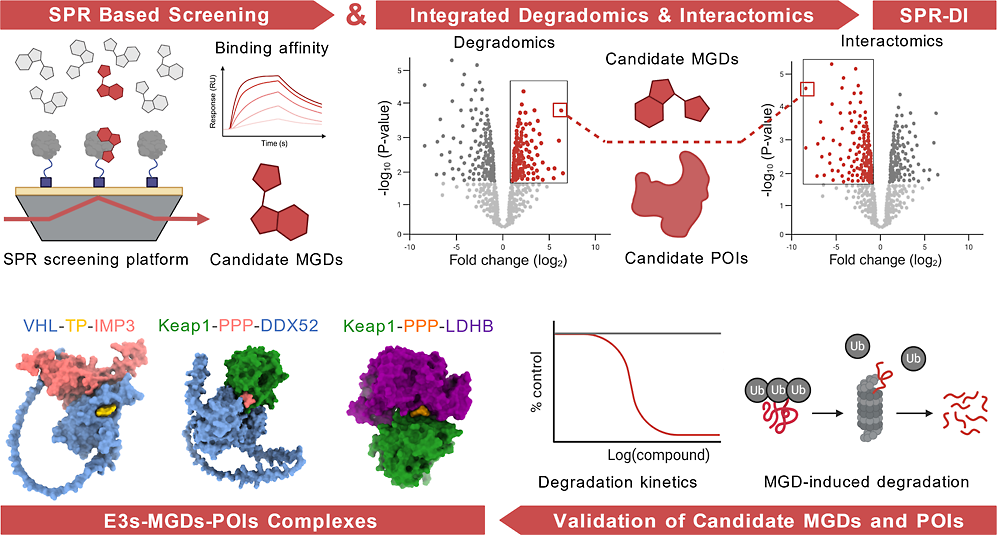
Literature Name: An Integrated Approach Combining Surface Plasmon Resonance Screening with Proteomics Enables Discovery of Natural Molecular Glue Degraders Journal Information: JACS Au | IF=8.5,
Research Background:
Molecular glue degrader (MGD) is a core tool for tackling a large number of "undruggable" targets. However, traditional screening methods mostly rely on fluorescently labeled proteins, and the labeling modification is extremely likely to change the native spatial conformation of proteins, resulting in high false positives and limited throughput in screening. To address this screening bottleneck, this study established an integrated label-free screening platform of SPR combined with degradomics and interactomics (SPR-DI), using two mainstream E3 ubiquitin ligases, VHL and Keap1, as screening vectors to efficiently discover novel molecular glues from natural product compound libraries.
Complete wet-lab and dry-lab system
Dry-lab (computational simulation module)
1. Based on the AlphaFold database, construct the complete three-dimensional protein structures of VHL and Keap1 and complete structure optimization;
2. Conduct batch molecular docking on 393 natural small molecules containing α,β -unsaturated carbonyl groups to preliminarily screen candidate compounds with high affinity for E3 ligases;
3. Perform 100 ns all-atom molecular dynamics simulations on the docked positive molecules to predict whether the E3-small molecule-target protein ternary complex can be stably formed, and analyze the key amino acid residues of hydrogen bonds and hydrophobic interactions;
4. Use the complex conformations output from the simulations as references to match the subsequent SPR measured kinetic curves to assist in interpreting the molecular binding characteristics.
Wet-lab (multi-layer in vitro + cell verification)
1. SPR high-throughput label-free screening: Immobilize the E3 protein on the sensing chip and batch measure the Ka and Kd binding constants of each natural product to quickly screen compounds with high binding activity;
2. Cross-screening of two omics (core innovation point)
Degradomics: After treating cells with small molecules, detect the whole protein expression by mass spectrometry to screen for significantly downregulated target proteins;
Interactomics: Pretreat with MG132 to inhibit the proteasome, and use Co-IP combined with mass spectrometry to capture newly added binding substrates of E3;
Take the intersection of the two sets of data to greatly eliminate false positives and lock in target proteins with high confidence;
3. In vitro biochemical verification: MST microscale thermophoresis reproduces the molecular binding affinity, and the TR-FRET experiment directly proves the assembly of the ternary complex;
4. Cell function verification: HiBiT fluorescence degradation experiment quantifies the degradation efficiency, and Co-IP reproduces the ternary complex in cells;
5. Gene knockout cell corroboration: Construct VHL−/ and Keap1/deleted cell lines to prove that the small molecule degradation effect completely depends on the corresponding E3 ligase.
Core innovation points of the article
In previous molecular glue screening, SPR or single proteomics was mostly used alone, which easily resulted in a large number of false-positive candidate molecules. In this study, an integrated screening process of "primary SPR screening + degradome + interactome double filtration" was adopted, combined with molecular simulation to predict the potential of ternary complexes, greatly reducing the workload of wet experiment screening. Relying on this system, the study successfully screened out two new natural molecular glues, triptolide and picropodophyllin, which promoted the formation of ternary complexes between E3 ligase and IMP3/DDX52/LDHB as molecular glues respectively, thus inducing their degradation, providing a standardized process for the development of natural product targeted degradants.
Paper II | Dihydrotanshinone I Targets PHGDH: Inhibiting Serine Synthesis to Remodel the Lung Cancer Immune Microenvironment
 Art
Art
Article Name: Dihydrotanshinone I inhibits PHGDH to suppress serine synthesis and remodel TME in NSCLC
Journal Information: Phytomedicine | IF = 11.3, a top journal in natural medicine in the first district of the Chinese Academy of Sciences
Research Background:
Phosphoglycerate dehydrogenase (PHGDH) is the rate-limiting enzyme in the de novo serine synthesis pathway. It is abnormally highly expressed in non-small cell lung cancer tissues, which can drive tumor proliferation, induce infiltration of M2-type inhibitory tumor-associated macrophages, and form an immunosuppressive microenvironment. Currently, there is no approved natural source inhibitor of PHGDH in clinical practice. The anti-tumor activity of the active ingredient of Salvia miltiorrhiza, dihydrotanshinone I (DHT I), has been reported, but its direct action target and complete metabolic immune mechanism are not yet clear. In this paper, a complete dry-wet combined chain was used to clarify that DHT I directly binds to PHGDH, blocks serine metabolism, and reverses the tumor immunosuppressive microenvironment, achieving immune combined synergism.
Complete Dry-Wet Experimental System
Dry Experiment (Bioinformatics + Molecular Simulation Module)
1. Bioinformatics analysis of multiple lung cancer clinical databases such as TCGA and GEO was performed to verify that high expression of PHGDH was significantly associated with poor prognosis of overall survival and progression-free survival in patients;
2. AlphaFold was used to construct the complete three-dimensional protein structure of human PHGDH;
3. Molecular docking was used to screen the binding pocket of DHTI, and 100 ns molecular dynamics simulation was used to stabilize the conformation of the complex, locking two core binding amino acids, Arg236 and Pro208;
4. Calculate the ligand-protein binding free energy, and predict that after DHTI occupies the binding pocket, it blocks the arginine methylation modification of PHGDH mediated by PRMT1.
Wet experiments (multi-layer verification of clinical samples + in vitro + in vivo)
1. Clinical sample verification: Collect tumor and adjacent tissues from lung cancer patients, and detect the differential expression of PHGDH protein by IH and WB;
2. Multi-target binding verification: Three types of interaction experiments, MST, CETSA, and DARTS, jointly confirm that DHT I directly binds to PHGDH and occupies its Arg236 site, spatially blocking the methylation modification mediated by PRMT1;
3. Site-directed mutagenesis experiment: After mutating the Arg236/Pro208 sites, the molecular binding affinity significantly decreases, verifying that the two residues are the binding cores;
4. In vitro enzyme activity detection: DHTI inhibits the catalytic activity of PHGDH in a dose-dependent manner at gradient concentrations;
5. LC-MS metabolomic analysis: Detect changes in metabolites in pathways such as serine and SAM methyl donors in cells;
6. Macrophage co-culture model: Flow cytometry is used to detect the polarization ratio of M1/M2 macrophages, and ELISA is used to detect the secretion of immunosuppressive factors such as IL-10 and TGF- ;
7. Single-cell RNA sequencing: Analyze the changes in immune cell subsets inside tumors in tumor-bearing mice;
8. In vivo efficacy experiment: Two lung cancer tumor-bearing models, LLC and A54, are used to conduct single-agent DHT I and DHT I combined with anti-PD-1 immunotherapy respectively, and the tumor growth and bone tissue damage are evaluated.
Core innovation points of the article
Get rid of the common problem of traditional Chinese medicine mechanism research of "only phenotypic, no direct target", and build a complete dry-wet closed loop of "clinical bioinformatics prognosis prediction, molecular simulation to lock the binding site multiple in vitro protein interaction verification cell metabolism and immune mechanism in vivo combined immunotherapy". It is directly demonstrated that DHTI blocks methylation modification by occupying the PHGDH binding pocket, explains the mechanism of immune microenvironment remodeling from the perspective of tumor metabolism, and provides a complete and reproducible research template for the anti-tumor immunity topic of Salvia natural products.

3D binding structure diagram of molecular docking and molecular dynamics simulation of PHGDH and dihydrotanshinone I
Article 3 | Covalent small molecule targeting NONO protein: Structural simulation combined with biophysical verification of RNA interaction mechanism
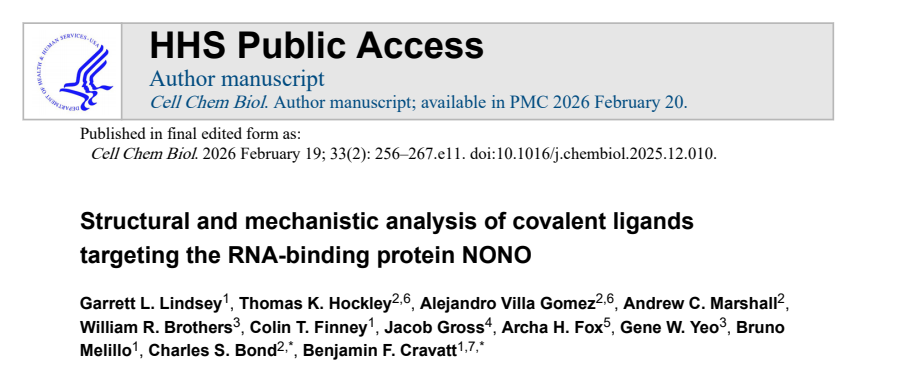
Article Name: Structural and mechanistic analysis of covalent ligands targeting the RNA-binding protein NONO
Journal Information: Cell Chemical Biology | IF=9.0, a leading journal in chemical biology in the first division of the Cell series.
Research Background:
NONO belongs to the DBHS family of RNA-binding proteins and is abnormally highly expressed in various tumors. It promotes cancer cell proliferation by regulating gene transcription and RNA splicing and is a highly promising anti-tumor target. However, there is currently a lack of highly selective covalent small molecule probes targeting NONO, and the dynamic binding conformations of NONO with small molecules and RNA are difficult to analyze through a single biochemical experiment. In this paper, molecular simulation is combined with multiple biophysical methods such as SPR and chemical proteomics to analyze the molecular mechanism of the covalent ligand (R)-SKBG-1 targeting NONO.
Complete wet and dry experimental system
Dry experiment (structural calculation module)
1. AlphaFold combines with the resolved crystal structure to correct and construct a three-dimensional complete model of the NONO homodimer;
2. Molecular docking predicts the binding mode of the covalent small molecule to the Cys145 cysteine site of the protein;
3. Long-term molecular dynamics simulation to compare the conformational changes of the NONO RNA binding pocket with and without the ligand;
4. Energy decomposition calculation to clarify that Cys145 is the core functional residue for small molecule covalent modification and regulation of RNA binding.
Wet experiment (biochemical + cell function verification)
1. In vitro recombinant protein purification, and SPR is used to quantitatively determine the KD constant of the ligand binding to NONO;
2. ABPP activity chemical proteomics: At the whole cell level, it is verified that the small molecule only selectively modifies NONO and has no obvious off-target binding;
3. Cys145 site-directed mutagenesis experiment: After mutation, the ligand binding ability is greatly lost, corroborating the key site of covalent binding;
4. RNA pull-down experiment: Verify the interaction between the small molecule and NONO’s target RNA;
5. Transcriptome sequencing: Analyze the gene transcription changes in tumor cells after ligand treatment;
6. Cell proliferation and colony formation assays to verify the inhibitory effect of covalent ligands on the proliferation activity of tumor cells.
Core innovation points of the article
Establish a standardized wet-dry research paradigm for covalent small molecules targeting RNA-binding proteins: virtual screening to predict covalent modification sites→molecular dynamics to analyze conformational changes→SPR + chemical proteomics for dual target validation→RNA interaction functional cell experiments. Clearly elucidate that small molecules modify the spatial conformation of NONO by modifying Cys145, enhance the binding ability of NONO to mRNAs, thereby reducing the transcription levels of downstream target genes (such as ESR1, AR), providing a complete experimental reference framework for the development of drugs targeting DBHS family RBPs.
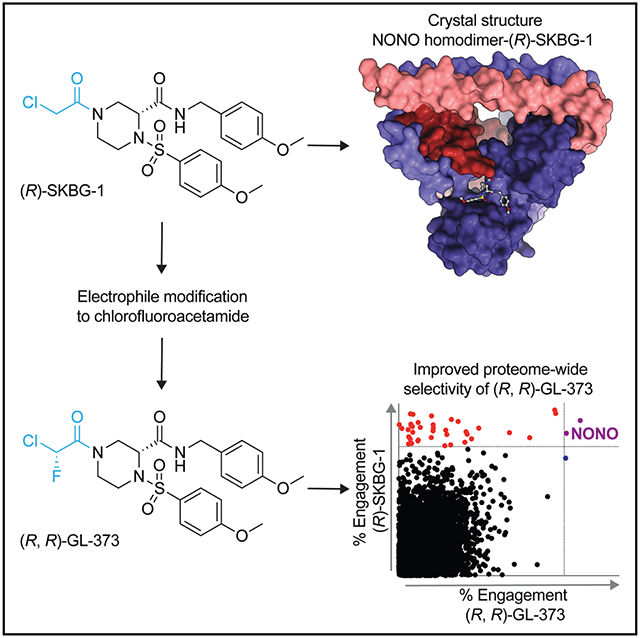
Schematic diagram of the NONO-ligand-RNA complex structure
Article 4 | Alisol B Targets TGFβ Receptor: Integrated Dry–Wet Approaches Elucidate the Anti-Lung-Cancer-Metastasis Mechanism
Journal information: Phytomedicine | IF=11.3, a top journal in natural medicine in the first district of the Chinese Academy of Sciences
Research background:
Overactivation of the TGF-β signaling pathway induces tumor epithelial-mesenchymal transition (EMT), promotes lung cancer invasion and distant metastasis. TGFβR1 and TGFβR2 are the core kinase targets of the pathway. The active triterpenoid component alisol B in Alisma orientale has been reported to have anti-tumor phenotypes, but its direct action on kinase targets is not clear. Most related studies only stay at the observation of cell migration phenotypes, lacking molecular-level binding evidence. Based on a complete evidence chain combining wet and dry experiments, this paper confirms that alisol B directly binds to the kinase pockets of two types of TGFβ receptors, blocking the TGF-β/Smad signaling pathway and inhibiting lung cancer metastasis.
Complete wet and dry experimental system
Dry experiments (bioinformatics + molecular simulation module)
1. Screen the core prognostic targets TβR1 and TβR2 related to the TGFβ pathway and lung cancer metastasis from public tumor databases; 2. Construct three-dimensional structures of the kinase domains of the two receptors using AlphaFold;
3. Predict the ATP-competitive pocket where alisol B binds by molecular docking, and verify the stability of the complex by 100 ns MD simulation;
4. Calculate the binding free energy of the ligand and the kinase, and compare the binding competitiveness with the natural substrate.
Wet experiments (in vitro biochemistry + cells + animals)
1. Triple in vitro interaction experiments of SPR, CETSA, and DARTS jointly demonstrated that alisol B directly binds to TGFβR1/TβR2;
2. In vitro kinase activity assay: Gradient drugs inhibit receptor autophosphorylation;
3. Cell function experiments: Scratch and Transwell invasion experiments were used to detect EMT and tumor migration ability;
4. WB was used to detect the protein expression of EMT pathway markers such as Smad2/3, E-cadherin, and Vimentin;
5. Orthotopic metastasis model of lung cancer in nude mice. After administration, the tumor volume and the number of distant organ metastasis foci were detected.
Core innovation points of the article
Break through the writing pain point of "network pharmacology talking about targets in vain" for traditional Chinese medicine natural products. Without relying on single bioinformatics prediction, first use molecular simulation to lock the kinase binding pocket, and then combine triple in vitro protein binding experiments to prove direct interaction evidence. Gradually carry out cell metastasis and in vivo animal experiments. The whole evidence chain is complete and rigorous, which is very suitable for direct reference in traditional Chinese medicine anti-metastasis mechanism research.
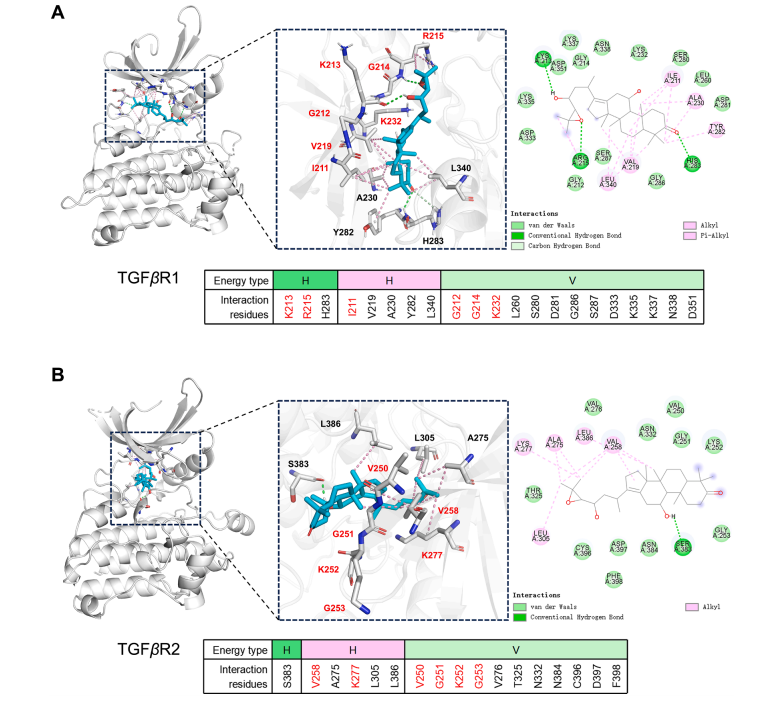
Molecular docking and binding mode diagram of alisol B with TGFβR1 / TGFβR2 proteins
The Fifth Article | Pim1 Kinase as a Therapeutic Target for Inflammatory Arthritis: Combining Wet and Dry Approaches to Explore the Old Drug Nilotinib
Journal Information: Research | IF = 11.0, a comprehensive biomedical journal in the first quartile
Research Background
Rheumatoid arthritis and ankylosing spondylitis are both chronic autoimmune inflammatory diseases. The pathological core is the abnormal differentiation of CD4+ Th17 cells, which mediates joint inflammatory infiltration, cartilage, and bone destruction. Serine/threonine kinase Pim1 is involved in T cell inflammation regulation, but the complete pathway by which it regulates Th17 differentiation through mitochondrial metabolism is not clear, and there are also no safe targeted drugs available for arthritis. This article combines clinical bioinformatics, molecular virtual drug screening, and multi-level in vitro and in vivo experiments to demonstrate that Pim1 increases mitochondrial calcium influx by phosphorylating MICU1, thereby activating oxidative phosphorylation (OXPHOS) metabolic reprogramming, promoting the differentiation of pathogenic Th17 cells, and screening the FDA-approved drug nilotinib as a new Pim1 inhibitor for the intervention of inflammatory arthritis.
Complete wet and dry experimental system
Dry experiments (clinical bioinformatics + molecular simulation module)
1. Transcriptome analysis of CD4+ T cells in peripheral blood and synovial tissues of clinical RA and AS patients showed that Pim1 was significantly highly expressed in CD4+T cells of patients, which was positively correlated with disease activity;
2. AlphaFold was used to construct the three-dimensional structures of human and mouse Pim1 kinases;
3. Batch molecular docking of the FDA-approved small molecule drug library was performed to initially screen 4 potential binding candidates;
4. 50 ns Molecular dynamics simulation was carried out to evaluate the stability of the complex of each ligand and Pim1 through RMSD and RMSF, and the optimal candidate nilotinib was screened; 5. Calculate the binding free energy of kinase-ligand and compare the binding affinity.
Wet experiments (clinical samples + cells + gene-edited animals)
1. Immunofluorescence and WB of clinical samples were used to detect the expression of Pim1 protein in synovial CD4+ T cells of patients;
2. Gene editing model: CD4-specific Pim1 conditional knockout (Pim1 cKO) mice were constructed, and after inducing arthritis, joint inflammation and the proportion of Th17 decreased significantly;
3. In vitro CD4+T cell differentiation model: Pim1 overexpression/inhibitor AZD1208 intervention was used to verify that Pim1 promotes Th17 differentiation;
4. Mitochondrial function detection: TMRE membrane potential, Rhod-2 mitochondrial calcium fluorescence, Seahorse oxygen consumption rate OCR were used to clarify the regulation of oxidative phosphorylation by Pim1;
5. Co-IP experiment: It was confirmed that Pim1 directly binds to the mitochondrial calcium transporter MICU1 and mediates its phosphorylation;
6. In vitro kinase experiment: Nilotinib can directly inhibit the catalytic activity of Pim1 kinase;
7. Two classic arthritis mouse models, CIA and SKG, were established, and nilotinib monotherapy was given respectively. Micro-CT and histopathology were used to evaluate joint bone erosion and inflammatory infiltration;
8. Target reconstitution verification: When nilotinib was administered in Pim1 knockout mice, there was no therapeutic effect, which confirmed that the drug action was completely dependent on the Pim1 target.
Core innovation points of the article
The benchmark dry-wet paradigm of autoimmunity metabolic translational medicine: Discovering target differences from clinical samples→Molecular virtual screening of marketed old drugs → Analysis of mitochondrial metabolic molecular mechanisms → Verification of drug efficacy in two gene-edited animal models. Deeply integrating molecular drug virtual screening with  the mechanism of cellular mitochondrial calcium metabolism, directly mining clinically available old drugs without the need for the synthesis of new compounds, and having both basic mechanism research and clinical transformation value.
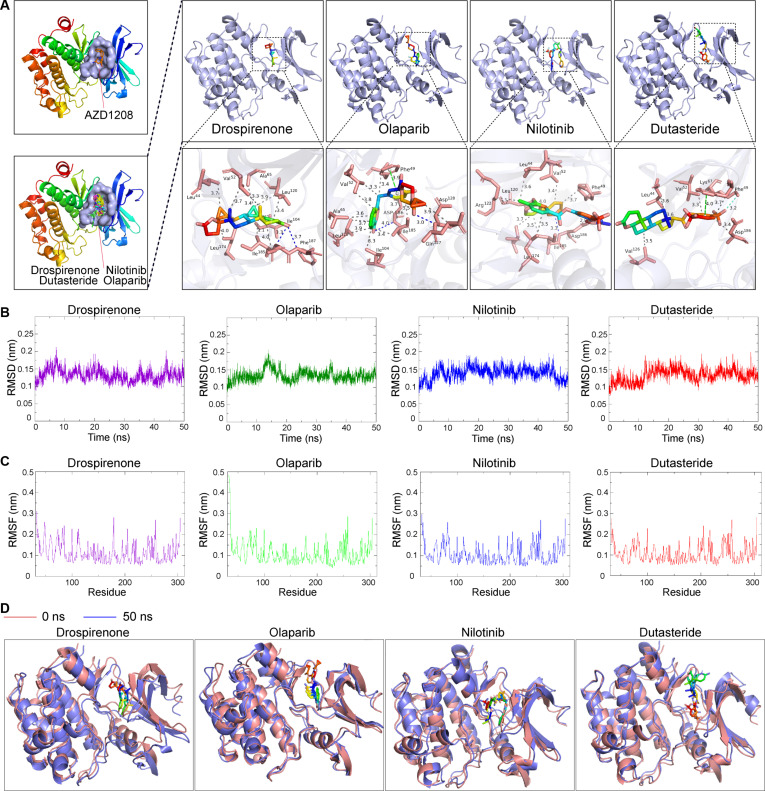
Molecular docking and molecular dynamics simulation of Pim1
Three core practical key points for writing a high-score paper with a combination of dry and wet experiments
Dry and wet experiments cannot be separated. Build a two-way evidence closed-loop. Avoid having computational simulations in one part and cell and animal experiments in another part with no connection between them. There are two standard logics:
① Dry experiments (bioinformatics/simulation) propose hypotheses of molecular binding and pathway regulation, and multiple wet experiments verify the conjecture layer by layer from proteins, cells, to in vivo;
② After observing cell/animal phenotype differences in wet experiments, trace back to molecular simulation to analyze the underlying mechanisms at the microscopic conformation and metabolic levels. The data of the two corroborate each other, and the recognition of reviewers will be greatly improved.
Strengthen quantitative data comparison and reduce "empty talk about mechanisms". The binding free energy and conformational fluctuation trends output by molecular simulation need to be trend-matched with the quantitative results of wet experiments such as the measured KD by SPR and MST, enzyme activity quantification, and Seahorse metabolism values. Keeping the simulated prediction trend consistent with the in vitro measured data can greatly weaken the reviewers’ doubts about "pure simulation without evidence".
Plan dry–wet experimental routes in tandem from day one. Don't run all your cell and animal wet-lab experiments first, only to bolt on molecular simulations at the end just to fill out the paper. Design the computational and in vitro pipelines together at the proposal stage — use virtual screening to narrow down compounds and targets early, saving substantial wet-lab consumables and labor, while making the entire research narrative more fluid and complete.
The worst pitfall in dry-lab/wet-lab combined is the disconnect between the two halves — molecular docking runs but no one validates it with SPR; SPR finishes but no one interprets the structure–activity relationship. GeneCreate Biotech has closed that gap: our computational biology team covers molecular docking, molecular dynamics simulations, and binding free energy analysis, while our molecular interaction platform delivers the full suite of wet-lab validation — SPR/MST/BLI, Co-IP, GST pull-down, and more. From virtual screening to in vitro binding data, one-stop delivery with seamless data continuity. To date, GeneCreate has supported clients in publishing 2,000+ research papers, with a cumulative impact factor of 12,000+. Ready for dry–wet integration? From computation to validation, GeneCreate is all you need.