


When conducting molecular mechanism research, nucleic acid-protein, protein-DNA, and miRNA-target gene interactions are the core evidence that underpins the depth of a paper and are also crucial experiments essential for sprinting towards a high-scoring SCI.
Many researchers deeply understand that RIP/RNA pull-down experiments have a high background, many false positives, consume a large amount of samples, but it is very difficult to obtain specific bands; dual-luciferase experiments have large fluctuations in replicate wells and unstable signals, and reliable data still cannot be obtained after repeated experiments; for ChIP experiments, it is difficult to explore cross-linking and sonication conditions, and the enrichment efficiency of target DNA fragments is poor, especially for tissue samples, it is extremely easy to fail. A large amount of time and reagent costs are consumed in interaction pre-experiments, the progress of the project is stuck, directly affecting the rhythm of article submission and publication.
To stably produce repeatable interaction data that can support paper publication, a kit with stable performance and compatible with multiple types of samples is particularly crucial. Currently, a large number of published research results have selected KingArk RIP,
RNA pull-down, dual-luciferase, and ChIP full set of molecular interaction kits. In this tweet, we have selected 8 representative high-level journal results, covering diverse research directions such as neural development, oncology, gut microbiota, liver diseases, aquatic stress, and plant stress resistance, to complete the interaction verification of RNA-protein, transcription factor-DNA,
miRNA-target gene, and produce solid and credible mechanism evidence. Below, according to the kit classification. we will interpret these 8 real literature application cases for you one by one.
I. RIP & RNA pull-down Kits
Experimental Applications: RIP enables validation of endogenous RNA-protein interactions under in vivo physiological conditions; RNA pull-down enables validation of RNA-protein interactions in vitro. The experimental products can be downstream interfaced with qPCR, WB, and mass spectrometry identification, and are compatible with various biological samples such as cells and animal tissues.
Case 1 | Brain|Neural SMG7 deficiency induces autism like behaviours via PKD1 upregulation

Autism spectrum disorder (ASD) is closely related to the nonsense-mediated mRNA decay (NMD) pathway, but the role of the NMD core factor SMG7 in brain function and autism remains unclear. In this study, an Emx1-Cre-mediated brain-specific Smg7 conditional knockout mouse model was constructed, and it was found that the knockout mice exhibited complete autism-like phenotypes: social communication deficits, repetitive stereotyped behaviors, anxiety-like characteristics, learning and memory impairments, along with overexcitation of neurons in the medial prefrontal cortex and hippocampus and abnormally increased dendritic spine density.
To clarify the pathogenic mechanism at the molecular level, the researchers used the GeneCreate RIP kit and RNA pull-down kit to verify whether PKD1 is a direct target of the SMG7-mediated NMD pathway:
1. The RIP experiment confirmed that the SMG7 protein can endogenously bind to the Pkd1 mRNA in mouse brain tissue;
2. The in vitro RNA pull-down experiment further corroborated the direct interaction between the two; combined with the detection of mRNA half-life, it was demonstrated that SMG7 promotes the degradation of Pkd1mRNA through the NMD pathway; knocking down PKD1 mediated by AAV virus in the brain could reverse synaptic structural abnormalities and neuronal overexcitation, and significantly improve the autism-related behaviors of mice. This work reveals that the SMG7-PKD1 signaling axis is a potential pathogenic pathway for autism, providing a new idea for intervention targets for autism.
Kit performance: Adapted to complex animal tissue samples such as brain tissue, effectively reducing non-specific background interference, efficiently enriching RNA-protein complexes, and the experimental data directly supported the publication in Brain (IF≈14.6) journal.
Case 2 | Interdisciplinary Medicine | Targeting eIF5A combats breast cancer progression by ClpP-dependent mitochondrial oxidative stress
The translation initiation factor eIF5A is highly expressed in breast cancer and is significantly associated with poor prognosis in patients, but the downstream molecular mechanism by which eIF5A regulates the malignant phenotypes of breast cancer remains to be elucidated. This study found that knocking down eIF5A could significantly inhibit the proliferation, migration and invasion of breast cancer cells and induce mitochondrial-dependent oxidative stress damage.
Study on using the Genereate RIP kit to mine downstream RNA target molecules of eIF5A: The RIP experiment confirmed that the eIF5A protein can directly bind to the mRNA of ClpP (5’UTR region), promoting the synthesis of ClpP protein at the translational level; ClpP encodes a mitochondrial protease and is a key regulatory molecule for mitochondrial homeostasis. The eIF5A-ClpP regulatory axis was established. This pathway is involved in breast cancer progression by regulating mitochondrial oxidative stress homeostasis, providing a new candidate target for the targeted therapy of breast cancer.
Kit performance: Adapted to tumor tissue samples, it can efficiently capture endogenous RNA-protein complexes, helping to explore the molecular mechanisms at the post-translational regulation level.
II. Dual-Luciferase Reporter Assay Kit
Experimental uses: A classic reporter gene system for verifying the targeting relationship between miRNA and the 3’UTR of target genes; detecting the transcriptional activation/inhibition activity of transcription factors on promoters and enhancers, and can also be used to verify the effect of SNP sites on the function of cis-elements; applicable to various cell samples and is a core in vitro verification method for transcriptional and post-transcriptional regulation research.
Case 3 | npj Biofilms and Microbiomes|miR 9394b from Lactobacillus paracasei extracellular vesicles targets iNOS to reprogram host NO ornithine metabolism and ameliorate DSS induced murine colitis
Probiotic extracellular vesicles are important mediators of host-microbe interactions. In this study, extracellular vesicles LPC-EVs were isolated from Lactobacillus paracasei (LPC) of infant origin, and it was confirmed that LPC-EVs can alleviate DSS-induced ulcerative colitis in mice, reshape the gut microbiota, strengthen the gut barrier, and inhibit the TLR4/NF-κB inflammatory pathway. Further sequencing found that the vesicles carry a high abundance of miR-9394b, which is the core effector molecule exerting the protective effect. The authors carried out targeted verification using the Genereate Dual-Luciferase Reporter Assay Kit:
- Constructed a wild-type plasmid of the 3’UTR of the iNOS gene and a reporter plasmid with a mutated binding site for miR-9394b;
- Co-transfected with miR-9394b mimic, and it was proved that miR-9394b could directly target the 3’UTR of iNOS and inhibit iNOS expression; the downregulation of iNOS reprogrammed the host arginine metabolism, promoting the metabolic flux to shift from pro-inflammatory NO synthesis to protective ornithine production; ornithine secreted by epithelial cells, as a downstream mediator, mediated the polarization of macrophages from pro-inflammatory M1 to anti-inflammatory M2, ultimately alleviating intestinal inflammatory injury. A complete analysis of the "bacterial vesicle miRNA-host metabolism-immune remodeling" pathway.
Case 4 | Theranostics | A peptide-based PROTAC targeting FOXM1
Liver fibrosis is an important risk factor for cirrhosis and hepatocellular carcinoma. The transcription factor FOXM1 is abnormally activated in chronic liver diseases and is involved in the malignant progression of fibrosis-hepatocellular carcinoma. In this study, the polypeptide-based PROTAC molecule P49-PROTACVHL was designed to recruit the VHL E3 ubiquitin ligase to achieve targeted degradation of FOXM1 protein; in CCl4 liver fibrosis and DEN/CCl4 fibrosis-associated hepatocellular carcinoma mouse models, this PROTAC could significantly alleviate liver fibrosis and inhibit tumorigenesis and development.
Using theGeneCreate dual-luciferase detection kit to analyze downstream transcriptional regulation:
- Clone the
 promoter sequence into the reporter vector;
 - Reporter gene experiments confirmed that the transcription factor FOXM1 could directly activate the promoter activity of ADAMTS12 ; the FOXM1-ADAMTS12 signaling axis regulates extracellular matrix remodeling and liver sinusoidal capillarization, which is the key molecular chain connecting the transformation of liver fibrosis to hepatocellular carcinoma, providing a new treatment strategy for fibrosis-related liver diseases.
Case 5 | Advanced Science|Integrative Omics Analysis Reveals the Regulation of Hypoxia Tolerance in Large Yellow Croaker (Larimichthys crocea) via the Lipoic Acid Synthase (lias) Gene
Low oxygen stress in aquaculture is an important problem restricting the large yellow croaker aquaculture industry. Through multi-omics analysis, this study screened out that the fatty acid synthase gene lias is a key gene for hypoxia tolerance in large yellow croaker; SNP variations in the gene can change enhancer activity, thereby regulating the transcriptional level of lias and affecting individual hypoxia tolerance.
The enhancer function was verified using the Genereate Dual-Luciferase Reporter Assay Kit: Constructed lias enhancer reporter plasmids carrying different SNP haplotypes, and confirmed that the transcription factor MAFK has differential transcriptional regulatory capabilities for different SNP haplotypes of the lias gene enhancer, explaining at the molecular level how SNP sites regulate lias expression and participate in the hypoxia adaptation of large yellow croaker.
Case 6 | Interdisciplinary Medicine | Microbial metabolite indole-3- propionic acid preserves astrocytic mitochondrial mitofusin 2 to limit neuroinflammation after traumatic brain injury
The gut microbial metabolite indole-3-propionic acid (IPA) has neuroprotective effects and can reduce secondary neuroinflammation after traumatic brain injury. IPA activates the AhR receptor in astrocytes, regulates the IRF1-RFFL-MFN2 signaling pathway, maintains the integrity of astrocytic mitochondrial structure, and inhibits neuroinflammatory damage.
Using the GeneCreate Dual-Luciferase Reporter Assay Kit to dissect transcriptional regulatory relationships: Reporter gene experiments have demonstrated that the transcription factor IRF1 can significantly activate the RFFL promoter; IPA inhibits the transcriptional activity of IRF1, downregulates the expression of RFFL, reduces the ubiquitination and degradation of MFN2 protein, thereby protecting the mitochondrial function of astrocytes and inhibiting neuroinflammation.
Common Advantages of the Dual-Luciferase Kit: High substrate sensitivity, low background signal, excellent quenching effect of firefly fluorescence, stable data between replicate wells, good repeatability, and suitable for various research scenarios such as miRNA target genes, promoters, enhancers, and SNP functions.
III. ChIP Kit
Experimental Purpose: Chromatin Immunoprecipitation (ChIP) is used to verify the binding of transcription factors, histones, and genomic DNA in vivo; the products are combined with qPCR (ChIP-qPCR) or ChIP-seq to analyze transcriptional regulation and epigenetic mechanisms; compatible with mammalian cells, animal tissues, and plant samples.
Case 7 | International Journal of Nanomedicine | Prenatal Delivery of HIF-1α siRNA Using Transferrin-Modified Lipid Nanoparticles Alleviates Hypoxia-Induced Neurodevelopmental Abnormalities via PTEN-PI3K-AKT Signaling
 |
Prenatal hypoxia can cause brain development damage in offspring and induce neurodevelopmental abnormalities. In this study, a prenatal hypoxia rat model was constructed, and transferrin-modified lipid nanoparticles were developed to achieve placental-targeted delivery of HIF-1α siRNA, effectively improving hypoxia-induced neurodevelopmental defects in offspring.
Using the Genecreate ChIP Kit (ChIP-qPCR) to conduct in vivo interaction verification: ChIP-qPCR confirmed that the HIF-1α protein can bind to the PTEN gene promoter in vivo; HIF-1α abnormally activates the PI3K-AKT signaling pathway by regulating PTEN transcription, resulting in disordered dendritic spine development in hippocampal neurons. This study provides potential intervention targets for prenatal hypoxia-induced neurodevelopmental damage.
Case 8 | Horticulture Research | VvNUP96-VvTCP15 coupling regulates growth and salt tolerance via a VvmiR319c-VvTCP4 module in grapevine
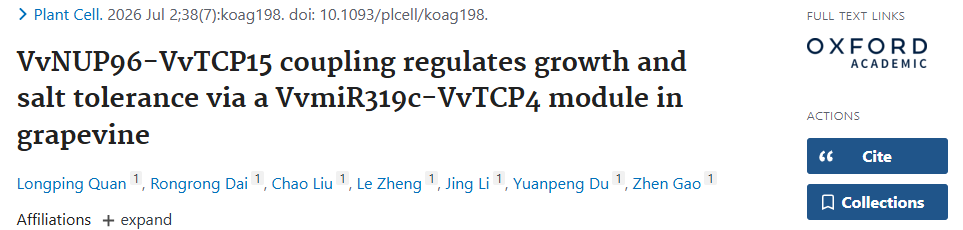
Salt stress seriously affects the growth and development of grapes. This study analyzed the molecular module in which the grape nucleoporin VvNUP96 and the transcription factor VvTCP15 co-regulate plant growth and salt tolerance. VvNUP96 can assist VvTCP15 to enter the nucleus, jointly regulate the downstream miRNA pathway, and balance grape growth and salt stress response.
The interaction in plants was verified using the GeneCreate Plant ChIP Kit (ChIP-qPCR):
The ChIP-qPCR experiment confirmed that the VvTCP15 protein directly binds to the promoter of the  gene in grapes and activates its transcription; the generated VvmiR319c targets and inhibits the growth negative regulatory gene VvTCP4, finally establishing the complete regulatory module of VvNUP96-VvTCP15-VvmiR319c-VvTCP4, providing a theoretical basis for grape salt-resistant breeding.
Common advantages of the ChIP kit: Optimize the cross-linking-ultrasound supporting reagents for the difficulties of ChIP experiments to reduce the non-specific background of tissue samples; have two independent ChIP systems for animals and plants to solve the industry pain points of hard-to-lyse plant chromatin and low enrichment efficiency of complex tissues such as animal brain tissues. Multiple high-scoring articles directly use this kit to complete the in vivo interaction verification of ChIP-qPCR.
GeneCreate Molecular Interaction Full Series Kits
In addition to the RIP, RNA pull-down, ChIP, and dual-luciferase detection kits used in the tweet cases, we also have a complete interaction product matrix: Co-IP kits (for animals/plants), GST pull-down, DNA pull-down (for animals/plants), silver staining kits, full sets of yeast two-hybrid library construction/point-to-point kits, with complete varieties, in-stock and immediate delivery, no need to wait, and can meet the screening and verification needs of protein-protein, protein-RNA, and protein-DNA interactions in one stop.
Core Advantages of the Product
- Wide sample adaptability, overcoming the experimental difficulties of tissue samples: Compatible with mammalian cells, animal brain tissues, tumor tissues, and plant samples, effectively solving the pain points of high background and poor enrichment efficiency in tissue sample interaction experiments.
- Full set of ready-to-use reagents, worry-free operation: The kit is equipped with all experimental components, supporting detailed operation manuals and operation videos, reducing the trial-and-error costs brought by groping for conditions.
- Flexible specification options, 6T small package with high cost performance: Both large and small packages can be selected; there is a unique 6T small specification package, with reduced quantity but unchanged quality, strict quality control of each component, high-standard delivery, avoiding waste caused by repeated freezing and thawing of reagents, suitable for both pre-experiments and formal experiments.
- Deeply cultivate the field of molecular interactions, providing full-chain technical support: With more than a decade of experience in molecular interaction research, we offer strong technical support and excellent after-sales service. We provide pre-sales experimental plan evaluation and after-sales experimental problem consultation, and assist you in overcoming various difficulties in interaction experiments throughout the process.
Having trouble repeatedly in interaction experiments and unable to obtain positive results? Welcome to consult and you can get the kit for free
Instruction manual, reference experimental plan, helping you strive for high-score SCI!